
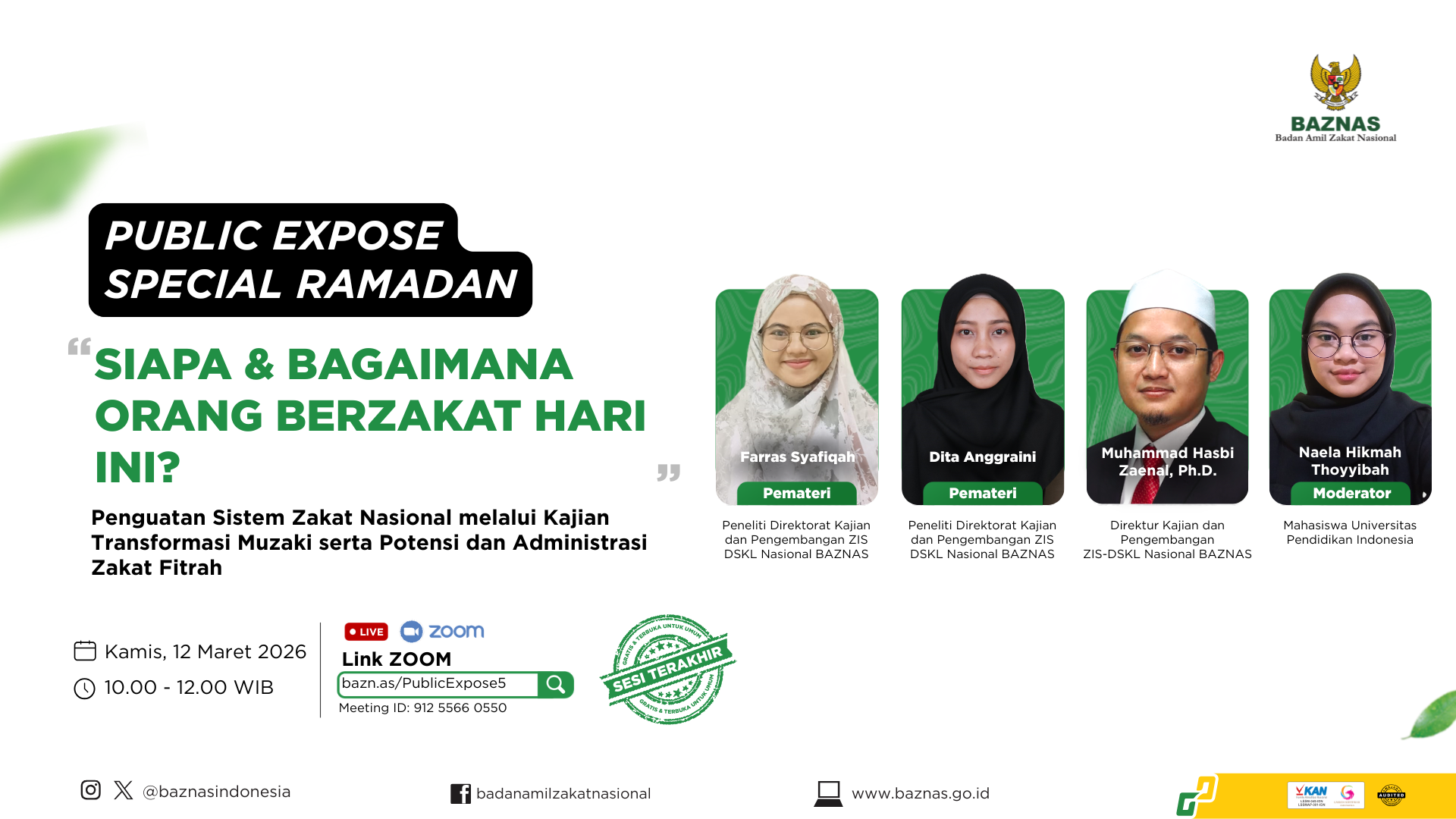
Jakarta, March 12, 2026 - The Directorate of Research and Development of BAZNAS RI once again held the 5th Public Expose Series as a forum to present various studies and research results on zakat management in Indonesia. This event was held online via Zoom and broadcast on the BAZNAS TV YouTube channel.
The event featured researchers from the Directorate of Research and Development of BAZNAS as speakers, namely Farras Syafiqah, M.E. and Dita Anggraini, S.E. The event was moderated by Naela Hikmah Thoyyibah, a student at the Indonesia University of Education.
Through this event, BAZNAS continues to strengthen the role of research and studies as a basis for policy development and innovation in zakat management in Indonesia. The Public Expose Series provides a space for academics, practitioners, and the public to gain a broader understanding of developments in zakat studies while introducing various strategic ideas that can encourage more effective and widespread optimization of zakat management for the welfare of mustahik.
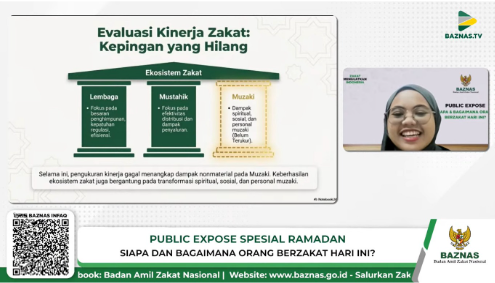
In the first session, Farras Syafiqah, M.E. presented material on the theme of “The Index of Transformation and Religiosity of Muzakki.” In her presentation, she explained that measurements of zakat performance have so far focused largely on institutional aspects and mustahik, while the dimension of transformation in muzakki has not received much attention. Through the development of the Muzakki Transformation and Religiosity Index, zakat is understood not only as a financial obligation, but also as a process of spiritual and social transformation for muzakki.
This study shows that the process of muzakki transformation begins with internal factors such as spiritual autonomy, social and spiritual connectedness, and religious competence, which drive motivation in paying zakat. This process then produces various transformative impacts, such as tahiriyah, tazkiyah, tanmiyah, and sakinah, which reflect spiritual balance as well as broader social benefits. This index is expected to be an instrument for zakat institutions to evaluate service quality and strengthen relationships with muzakki.
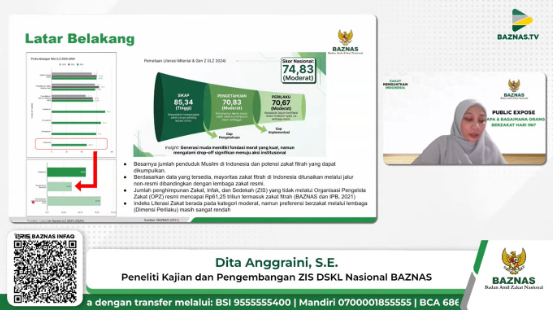
In the second session, Dita Anggraini, S.E. presented material on the theme of “The Potential of Zakat Fitrah & National Administration Strategies.” In her presentation, she explained that Indonesia has enormous potential for zakat fitrah due to its large Muslim population, with an estimated potential of trillions of rupiah each year. However, the management of zakat fitrah is still not optimal because most of it is still distributed through unofficial channels.
Therefore, it is necessary to strengthen the role of zakat management institutions, particularly the Zakat Collection Unit (UPZ) at the mosque level, as well as a more integrated, transparent, and accountable management system. In addition, optimizing the management of zakat fitrah also requires regulatory support, capacity building for managers, and the use of digital technology to improve the effectiveness of zakat collection and distribution in a more structured and sustainable manner.
Through this 5th Public Expose Series event, BAZNAS demonstrated that strengthening the zakat ecosystem is not only related to optimizing collection, but also to the spiritual transformation of muzakki and strengthening a more professional and integrated zakat management system. It is hoped that this activity will provide an overview of the development of zakat studies in Indonesia while encouraging collaboration among various parties in developing a more effective, transparent, and sustainable zakat management system.