
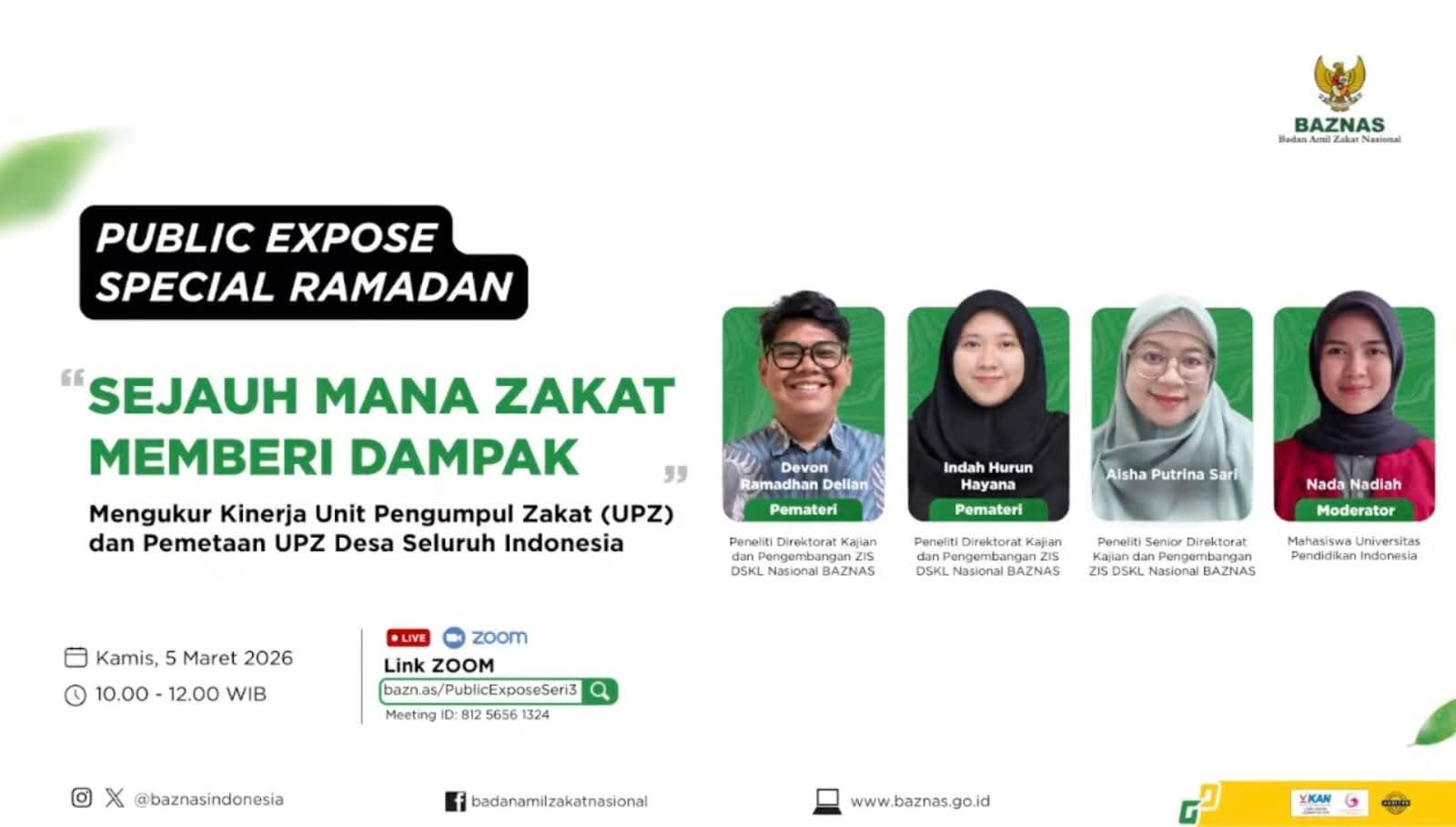
Jakarta, March 5, 2026 – The National Zakat Agency (BAZNAS), through the Directorate of ZIS-DSKL Research and Development, held a Special Ramadan Series Public Expose with the theme “How Far Does Zakat Have an Impact?”. This activity was conducted online as part of the BAZNAS Ramadan Program and was attended by zakat administrators, academics, and the general public.
The event aimed to present research findings and strengthen understanding of zakat management in Indonesia, particularly regarding the performance measurement of Zakat Collection Units (UPZ) and the mapping of village UPZs.
The Director of Research and Development of ZIS-DSKL at BAZNAS, Dr. Muhammad Hasbi Zaenal, Ph.D, gave an introduction to the event. Next, Aisha Putrina Sari, M.S.M., Senior Researcher at the Directorate of Research and Development of ZIS-DSKL National BAZNAS, delivered a speech. The event was moderated by Nada Nadiah, a student at the Indonesia University of Education who is currently undergoing an internship program at the Directorate of Research and Development of ZIS-DSKL National BAZNAS.
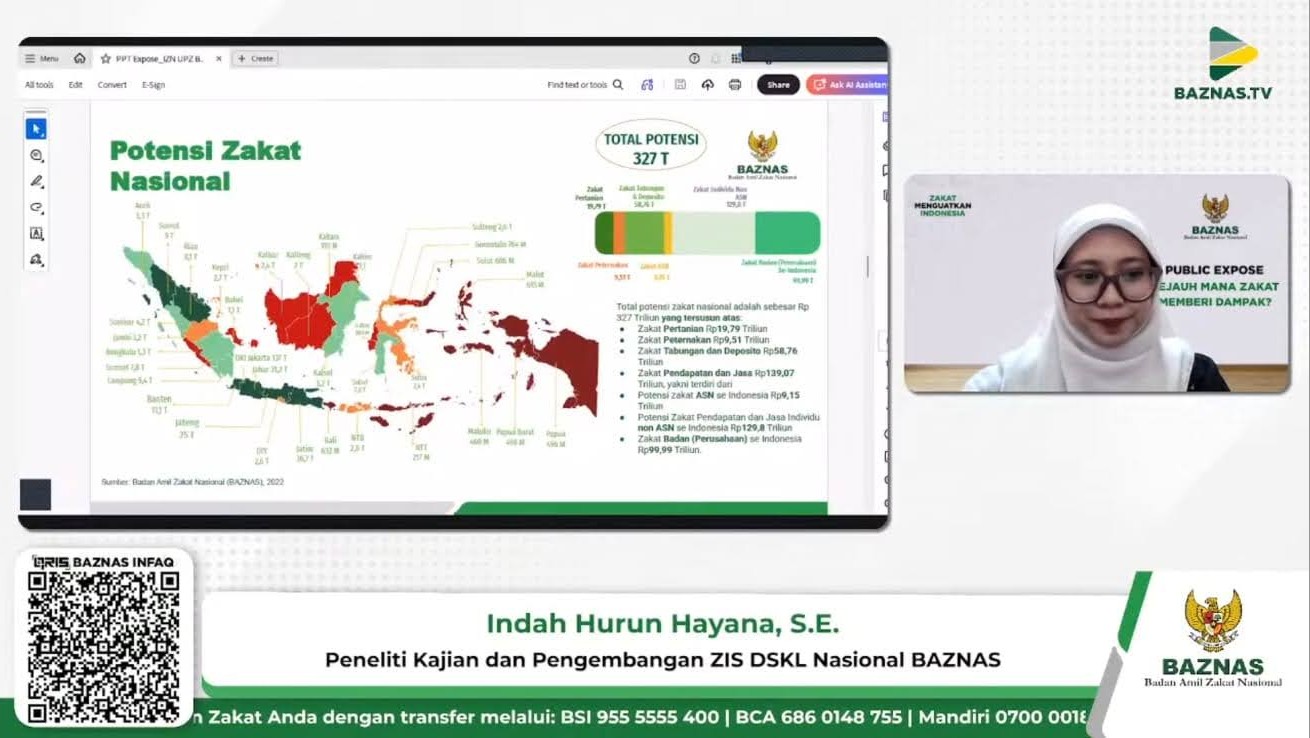
Indah Hurun Hayana, S.E., Researcher at the Directorate of ZIS-DSKL National Studies and Development at BAZNAS, presented a study on measuring the performance of Zakat Collection Units (UPZ) through the development of the National Zakat Index for UPZ as a standardized and data-based evaluation tool. This study discusses UPZ performance measurement through two main dimensions, namely governance and organizational capacity as well as zakat performance and services, which cover institutional, planning, operational, human resources, reporting, supervision, socialization, collection, services to muzaki, and zakat distribution aspects.
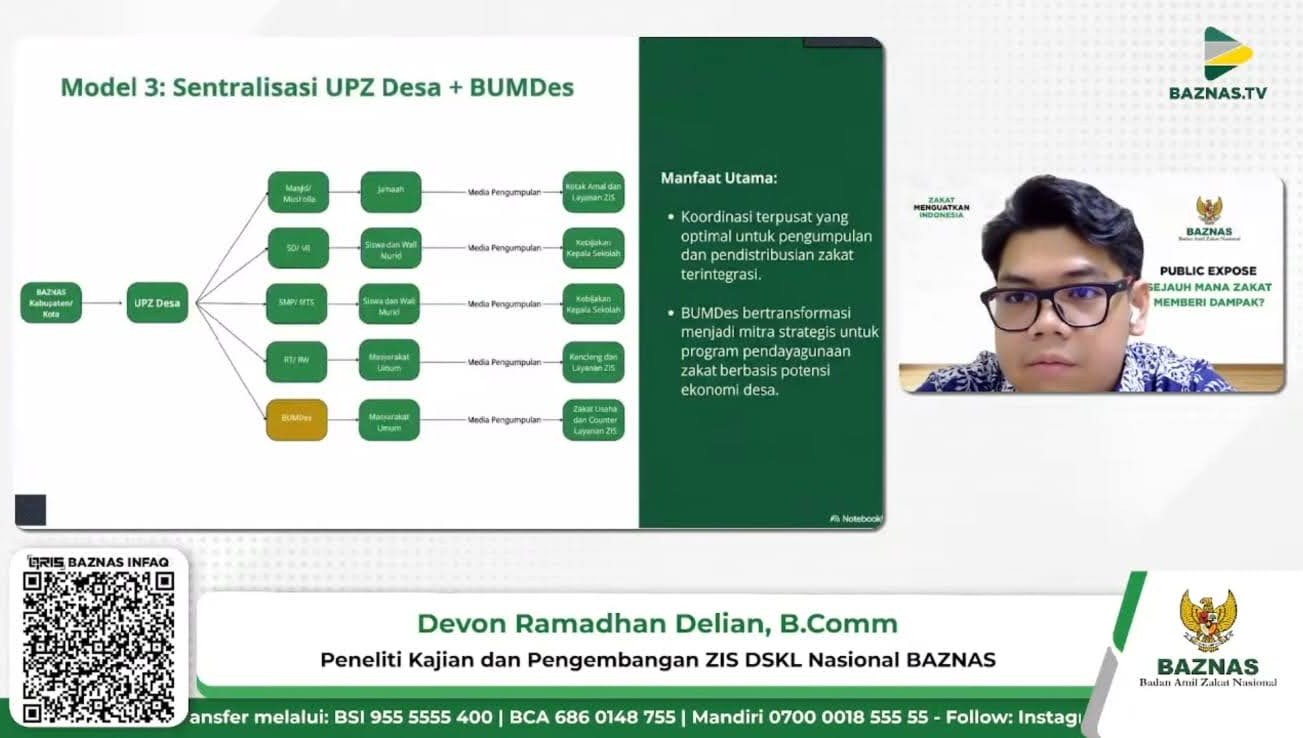
Furthermore, Devon Ramadhan Delian, B.Comm., Researcher at the Directorate of ZIS-DSKL National Studies and Development of BAZNAS, presented a study on the mapping of village UPZ in Indonesia. This study highlights the potential of microeconomics at the village level and the importance of strengthening the UPZ institution so that zakat management can run in a more structured manner.
Through this Public Expose event, BAZNAS hopes that the results of the study presented can serve as a basis for strengthening zakat management and provide insights for zakat administrators and the community.